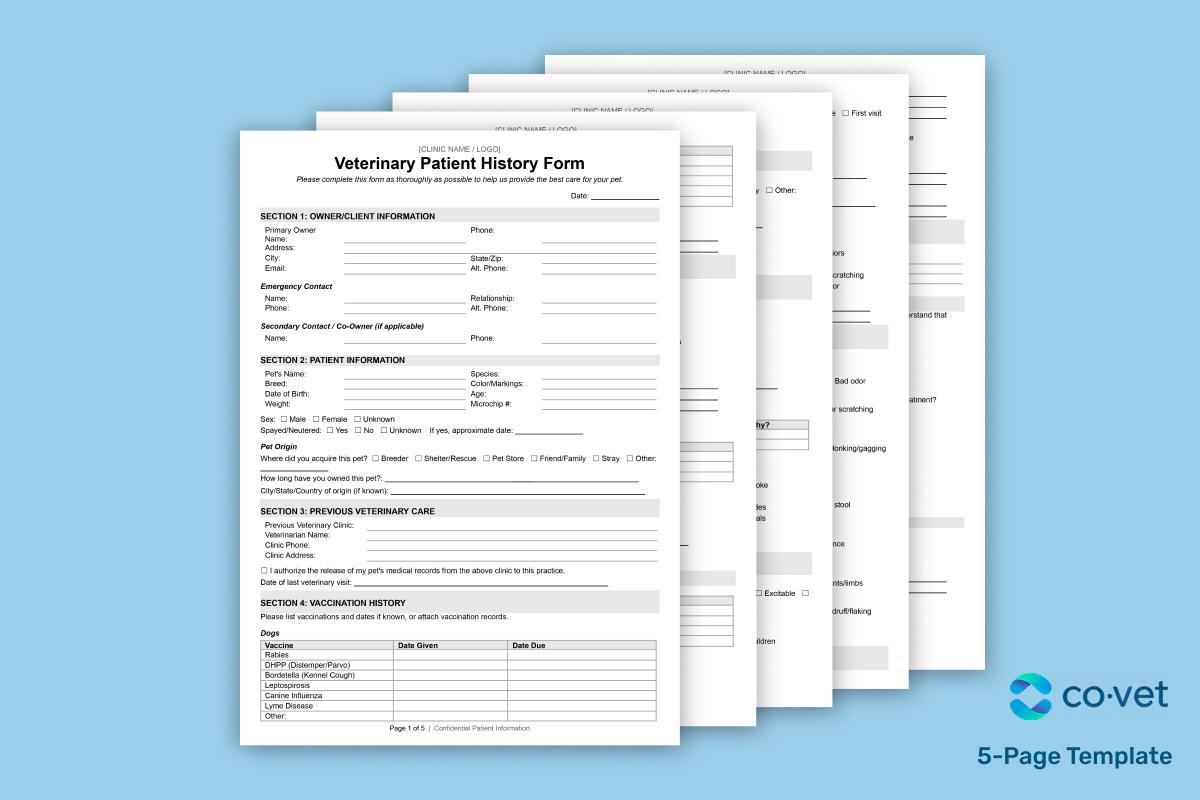
Veterinary medical records play a vital role in ensuring high-quality care, continuity of treatment, and legal protection for both clients and practitioners. But unlike human healthcare, veterinary practices are not governed by HIPAA. Instead, they must navigate a complex patchwork of state-level regulations that define how records should be created, stored, accessed, and released.
This guide covers the most important aspects of veterinary medical records laws, including:
State-specific retention requirements
Confidentiality obligations and exceptions
Record format and storage standards
Ownership and transfer of records
Practical compliance strategies for modern practices
Why veterinary medical records laws matter
Veterinary medical records laws exist to protect clients, support clinical continuity, and provide accountability.
Clear, complete vet records are the practice's first line of defense if a treatment decision is ever questioned.
Unlike HIPAA—which governs human medical records—veterinary records are regulated at the state level, meaning requirements can vary significantly depending on where a practice operates.
These laws define:
What must be documented in a patient’s record
How long records must be retained
Who has access to them
Under what conditions they may be disclosed
Non-compliance can lead to disciplinary action from veterinary licensing boards, malpractice liability, or loss of licensure.
Record retention requirements by state
Retention periods for veterinary records vary by state and are set by each state’s veterinary practice act. There is no federal standard for record retention in veterinary medicine.
Common retention windows
California: 3 years from last visit (California Business & Professions Code §4855)
Texas: 5 years (Texas Administrative Code, Title 22, Part 24)
New York: 3 years (8 NYCRR §70.2)
Florida: 3 years (Florida Statute §474.214)
Ohio: No specific statute; AVMA recommends a minimum of 5 years
UK (RCVS): No fixed duration, but records must be kept “for a reasonable period” under the RCVS Code of Professional Conduct
When in doubt, follow the AVMA’s recommendation: retain records for at least five years from the last patient interaction.
What about inactive patients?
Many practices also need to retain records for patients that are deceased or inactive. Some states require records to be maintained for several years after an animal has died or a client relationship has ended. It’s best practice to retain records even after a case closes, especially where litigation is possible.
Confidentiality and client privacy
Practice owners often ask whether there are HIPAA laws for animals, and the short answer is no, but state confidentiality rules still apply.
While HIPAA does not apply to animal patients, veterinary professionals are still expected to maintain client confidentiality under state law and professional ethical standards.
What is considered confidential?
Client contact details (name, address, phone)
Patient medical history, diagnoses, and treatments
Financial and billing records
Communication between vet and client
When can records be released?
In most states, veterinary records may only be released with:
Written client consent
A subpoena or court order
A request from a licensing or regulatory authority
A request from another veterinarian involved in the patient’s care (with client knowledge)
Unauthorized disclosure of records can result in complaints to the state board, legal action, or loss of trust.
Who owns veterinary medical records?
In most US jurisdictions, the veterinary practice owns the physical or digital record. However, the client has the right to request a copy of their animal’s records.
Key principles:
The practice must maintain the original record (or a digital equivalent).
The client can request a copy of the record at any time.
Some states allow a fee to be charged for record duplication.
Practices must comply with client requests in a timely manner.
This distinction is especially important during practice transitions (sales, closures) or when clients transfer to a new provider.
Minimum content requirements
Most state practice acts define a minimum set of information that must appear in each record. The AVMA also provides guidelines that represent best practice across the profession.
Required elements typically include:
Client name, address, contact information
Patient species, breed, age, sex, weight, and identifiers
Presenting complaint and clinical history
Physical examination findings
Diagnostic results (labs, imaging, etc.)
Diagnosis and treatment plan
Medications dispensed (including dosage, frequency, duration)
Surgical and anesthesia notes
Client consent (especially for procedures or euthanasia)
Follow-up instructions and communications
Date and identity of the treating veterinarian
Incomplete records are a common cause of disciplinary action and can undermine the practice’s ability to defend itself in disputes.
For controlled substances specifically, a veterinary controlled drug log template helps keep those entries complete and inspection-ready.
Storage formats: paper vs. digital
Most state laws are format-neutral—they don’t mandate whether records are kept on paper or electronically. However, digital records are increasingly preferred for compliance, accessibility, and security.
If using electronic records, practices should ensure:
Records are backed up regularly
Access is restricted to authorized personnel
Audit trails are maintained (who accessed or modified a record and when)
Encryption is used for data at rest and in transit
Systems comply with any applicable data protection regulations (e.g., GDPR for UK/EU)
AI-powered tools like CoVet offer built-in safeguards, including role-based access, encrypted cloud storage, and automated audit logs—helping practices maintain compliance by default.
Multi-state and international considerations
Practices operating across multiple states or countries need to be aware of overlapping or conflicting regulations.
US
Each state has its own veterinary practice act administered by a state board. There is no federal baseline, which means:
Retention periods range from 1 to 7+ years depending on the state
Confidentiality rules differ in scope and enforcement
Telehealth documentation requirements are still evolving
UK
The RCVS Code of Professional Conduct (Chapter 12) requires that records are:
Maintained for a reasonable period
Complete, legible, and timely
Available for transfer to another vet on request
Additionally, UK practices must comply with GDPR when handling client data.
EU
EU-based practices must comply with GDPR for client information (names, addresses, contact details), and may also be subject to national veterinary legislation governing medical records.
Common compliance pitfalls
Here are the most frequently cited violations in veterinary record-keeping:
Incomplete entries – Missing treatment details, dosages, or follow-up notes.
Premature destruction – Disposing of records before the state retention period expires.
No client consent on file – Especially for surgical, anesthetic, or euthanasia procedures.
Unauthorized access or disclosure – Sharing records without proper authorization.
Poor record security – Paper records left in unsecured areas; digital records without access control.
Using a structured digital system—especially one that prompts for required fields—can significantly reduce these risks.
Compliance strategies for modern practices
To stay compliant and reduce legal risk:
Know your state’s rules – Check your state veterinary practice act for record requirements.
Set a retention policy – Define and enforce record retention timelines across the practice.
Use templates – Standardized SOAP note templates ensure consistent, complete documentation.
A consistent veterinary SOAP template makes it easier to capture every required field on each visit.
Train your team – All staff who access records should understand privacy and documentation expectations.
Audit regularly – Periodically review records for completeness and compliance gaps.
Adopt cloud-based tools – Cloud PIMS platforms like CoVet can automate backups, enforce role-based access, and maintain audit trails.
How CoVet supports compliance
CoVet was built to help veterinary teams create thorough, compliant records without the documentation burden. Here’s how:
AI-assisted SOAP notes ensure consistent, complete documentation across all visits.
Customizable templates align with your state’s content requirements.
Encrypted cloud storage keeps records secure and accessible.
Audit-ready access logs track who accessed or modified each record.
Voice-to-record dictation reduces manual entry and keeps records detailed and timely.
CoVet’s goal is simple: help you focus on patients, not paperwork—while ensuring every record meets your jurisdiction’s standards.
Final thoughts
Veterinary medical records laws are not one-size-fits-all. With variations across states and countries, practices need to stay informed and proactive. The best defense against compliance issues is a combination of clear policies, trained staff, and modern tools that enforce good record-keeping habits by design.
If your practice is looking for a smarter way to manage records while staying compliant, CoVet can help.
About the Author
)