)
Discharge is the point when recovery moves from the veterinary team to the pet owner. The instructions owners take home should make medications, activity restrictions, expected recovery, warning signs, and follow-up easy to understand.
This guide covers what to include in a veterinary anesthesia discharge template, how to adapt it by procedure, and how to create and customize one with CoVet.
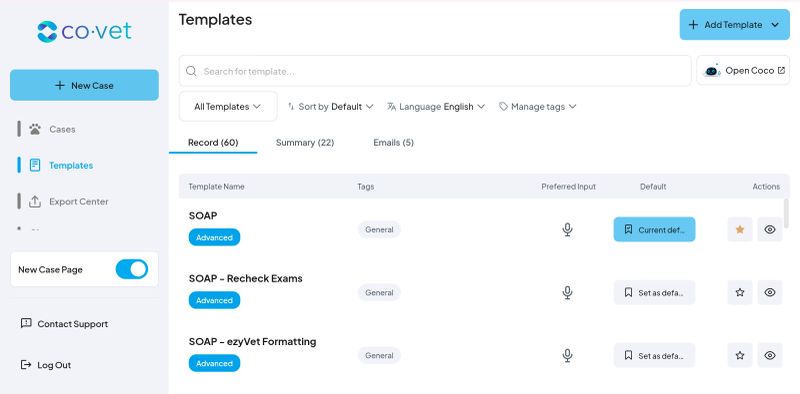
CoVet has a growing database of veterinary templates. Check out other templates that might be helpful for you:
What a veterinary anesthesia discharge template is
A veterinary anesthesia discharge template is a structured document that gives pet owners clear instructions for caring for their pet after anesthesia, sedation, or a surgical procedure.
It summarizes the patient's recovery before leaving the clinic and explains what owners need to do once they get home, including medication schedules, activity restrictions, feeding recommendations, warning signs, and follow-up care.
Unlike a general discharge sheet, this document focuses specifically on recovery from anesthesia.
It complements the patient's medical record without replacing it, using information already documented in your SOAP templates to create clear home care instructions.
Document | Primary purpose | Written for |
Veterinary anesthesia discharge instructions | Provide post-anesthesia discharge instructions, medications, recovery expectations, warning signs, and home care | Pet owner |
Surgical discharge form | Covers surgical recovery including incision care, activity restrictions, and follow-up | Pet owner |
Anesthesia consent form | Document informed consent and disclose risks before the procedure | Pet owner |
SOAP notes | Records the patient's history, examination findings, assessment, and treatment plan | Veterinary team |
Although anesthesia often accompanies surgery, reducing its discharge documentation to a small section within a surgical discharge form can leave important recovery information overlooked.
A consistent veterinary template gives the team the same starting structure for every discharge while leaving room to tailor the instructions to the patient, procedure, and recovery plan.
“Anesthesia is where things can go wrong fast. It deserves as much attention as the surgery itself.”
— Dr. Lydia Love
Anesthesia & analgesia specialist, NC State University
What to include in a veterinary anesthesia discharge template
While the details vary from one patient to the next, the structure of a veterinary anesthesia discharge template should remain consistent.
The 2025 AVMA anesthesia monitoring guidelines recommend using surgical safety checklists tailored to each practice to improve communication, reduce mental workload during high-stress situations, and help ensure critical steps are not overlooked.
The same structured approach is useful at anesthesia discharge. A consistent template can help teams document recovery findings and organize the information owners need at home.
The following sections break the template into its core components:
Patient, procedure, and recovery summary
The discharge recommendations outlined in the ACVAA Small Animal Anesthesia and Sedation Monitoring Guidelines recommend confirming that patients are normothermic, mentally oriented, ambulatory, and free of nausea and pain before discharge unless prevented by the disease or procedure.
To consistently and accurately document that assessment, every anesthesia discharge template should begin with the information needed to identify the patient, summarize the procedure performed, and document the patient's condition before leaving the clinic.
Begin your anesthesia discharge template with:
Patient identification
Procedure performed
Date of procedure
Attending veterinarian
Ambulatory status
Mentation
Temperature
Pain assessment
Nausea/vomiting
Catheter removal (if applicable)
Information already documented in the anesthesia record and patient history can be carried into the discharge instructions, reducing duplicate documentation.
Home care and activity instructions
Once the patient leaves the clinic, the discharge instructions become the owner's primary source of guidance during recovery.
This section should provide clear, procedure-specific home care instructions that explain what owners can expect over the first few days at home and how to care for their pet safely.
Clear post-operative instructions also help set realistic expectations, reduce unnecessary follow-up calls, and make it easier for owners to recognize when recovery is progressing normally or when they should contact the clinic
Include:
Food and water instructions
Appetite expectations
Activity restrictions
Exercise limitations
Incision or bandage care
E-collar use
Bathing restrictions
Expected recovery timeline
Medication and pain management instructions
Medication instructions should be specific enough for owners to follow without guessing.
Every discharge instruction should tell owners exactly what medication to give, why it has been prescribed, when it should be administered, and what to do if a dose is missed.
Clear, specific instructions improve treatment compliance, support pain management, and reduce avoidable follow-up calls to clarify dosing or administration.
Include:
Medication name
Purpose
Dose
Route
Frequency
Duration
Missed-dose instructions
Storage instructions if relevant
Incision and wound care
This section should be included whenever a patient is discharged with an incision, wound, drain, or bandage that requires home monitoring.
Your surgical discharge form should clearly explain what normal healing looks like, how owners should protect the surgical site, and which changes warrant veterinary attention.
Clear expectations help owners monitor recovery with confidence while supporting earlier recognition of potential complications.
Include:
Incision monitoring
Bandage care
E-collar use
Keeping the incision clean and dry
Bathing restrictions
Suture or staple removal timeline
Expected appearance versus abnormal changes
Warning signs and when to contact the clinic
Your home care instructions should clearly distinguish between expected post-anesthetic effects and signs that require prompt veterinary attention.
Giving owners clear escalation guidance helps them respond appropriately if concerns arise, reducing uncertainty while supporting effective client communication throughout the recovery period.
Include:
Persistent vomiting
Collapse
Difficulty breathing
Uncontrolled pain
Excessive bleeding
Severe swelling
Inability to urinate
Prolonged lethargy
Seizures or neurological changes
Emergency contact information
Follow-up instructions
The last core component your veterinary anesthesia discharge template should include is follow-up instructions.
This section tells owners what happens after the initial recovery period, including when the patient should return for re-evaluation and whether additional treatment is required.
Include:
Recheck appointment
Suture or staple removal
Medication review
Repeat diagnostics or imaging if required
Rehabilitation instructions where applicable
Clinic contact information
After-hours emergency contact details
Adapting anesthesia discharge instructions by procedure
No two patients recover the same way. While every veterinary anesthesia discharge follows the same general framework, the instructions should be adjusted to reflect the procedure performed and the patient's expected recovery.
Information already documented in the patient's physical exam template can help guide those procedure-specific recommendations.
Procedure type | What to customize |
Routine soft tissue surgery (spay, neuter, mass removal) | Incision care, activity restriction, pain medication, e-collar instructions, recheck date |
Orthopedic procedures | Weight-bearing restrictions, bandage or splint care, rehabilitation plan, follow-up imaging |
Dentistry and oral procedures | Feeding recommendations, oral care instructions, expected bleeding, pain management |
Sedation and non-surgical procedures | Expected drowsiness, feeding and water guidance, supervision until fully recovered |
Diagnostic or minimally invasive procedures (endoscopy, imaging under anesthesia) | Procedure-specific monitoring, medication instructions, signs that require re-evaluation |
Automating anesthesia discharge instructions with CoVet
Preparing anesthesia discharge instructions often means pulling information from different parts of the medical record and translating it into clear, client-friendly guidance.
As one of the leading AI scribes in veterinary practice, CoVet simplifies that process by turning dictated recovery notes into structured, client-ready discharge instructions without changing the clinical decisions already made.
Dictate your recovery assessment, medication instructions, home care guidance, and follow-up plan during or after the appointment, and CoVet organizes them into a standard veterinary report.
With more than 95 templates developed by practicing veterinarians, including discharge and visit summaries, there's no need to recreate the same documentation for every patient.
Records sync with supported practice management systems (PMS) or can be transferred through the Chrome extension, and discharge summaries can be exported in multiple languages.
CoVet documents the clinical decisions you've already made, helping keep verbal and written discharge instructions consistent without generating clinical recommendations.
Frequently asked questions about veterinary anesthesia discharge instructions
What's the difference between anesthesia discharge instructions and general discharge instructions?
Anesthesia discharge instructions focus on recovery after anesthesia or sedation, including monitoring, medications, activity restrictions, and warning signs. General discharge instructions may cover broader treatment or hospitalization guidance.
Can I use the same discharge template for sedation and surgery?
Yes. Use the same template structure, but tailor the recovery instructions, medications, activity restrictions, and monitoring recommendations to the procedure performed and the patient's expected recovery.
What should owners monitor after anesthesia?
Owners should monitor appetite, activity, incision healing if applicable, medication response, and any signs of complications, including vomiting, breathing difficulty, excessive swelling, uncontrolled pain, or prolonged lethargy.
When is a patient ready to be discharged after anesthesia?
Patients should be discharged only when they are appropriately recovered, including being normothermic, mentally oriented, ambulatory, and comfortable, unless limited by the disease or procedure.
Can CoVet generate anesthesia discharge instructions from my clinical notes?
Yes. CoVet converts dictated clinical notes into structured anesthesia discharge instructions in approximately 30 seconds, documenting the clinical decisions you've already made without generating clinical recommendations.
About the Author
)
)
)