For Veterinary School Faculty
Your Students Are Already Using AI. Now You Can Shape How.
Decide which parts of the record the AI drafts and which parts students reason through themselves, then add support as they progress. You also get a scribe and record summarizer for your own caseload, starting today.
Where things stand
Meet Students Where They Already Are
Students are already experimenting with AI on the floor, often with free consumer apps and little guidance. Most aren’t trying to cut corners; they just haven’t been shown what good use looks like.
A policy tells students what not to do. A sanctioned tool shows them what to do instead, and gives you visibility into how they use it.
Section-by-section control
Set the Level of Support, Section by Section
Choose which sections the AI drafts and which ones the student writes.
A common setup: the AI drafts the history and the exam findings the student collected, and leaves the assessment and plan to the student. The student does the reasoning, then compares their work with the AI version.
Nobody minds a tool typing up a physical exam the student performed. The reasoning is what you want them to practice, and now you can build that into the template.
Students write the assessment and plan.
The AI handles the history and exam findings.
Turn off pre-filled normals.
Students record what they actually found.
Add support as students progress.
A second-year and a final-year student can work from different templates.
The section they wrote is visibly theirs, so you can see their reasoning for yourself.
For your own cases
It’s for Your Caseload Too
You're teaching on top of a specialist service. The documentation doesn't care.
- 01
The 200-page referral history
Drop it in, get a structured summary against your own template, then ask it questions. "When was Cytopoint last given?" "What nutritional products has this patient had in the last six months?" Faculty in nutrition, oncology, internal medicine and ECC tend to reach for this before anything else. Every summary is a draft for your review. Long histories can be summarized in parts and combined, so you can check each part against its source and still see the whole picture.
- 02
Your notes, drafted
Clinical notes, referral letters and discharge instructions, drafted for your review.
- 03
Consistent output
Build the template once and every case comes back in the format you actually want, rather than re-prompting from scratch each time.
You’re also the person modeling what responsible use looks like. Hard to teach it without doing it.
What the research shows
Write First, Then Compare
The most useful habit you can teach is simple: students write the note first, then compare it with the AI version.
The reasoning stays theirs, and the AI becomes a second opinion on their work.
The research points the same way. Students who draft their own note and then revise against AI output keep their quality, and the weaker students improve. Starting from the AI draft is where quality drops, mostly in the assessment and plan. Tutoring studies show the same pattern: guardrailed tools support learning without the penalty that comes with unrestricted access.
Students can’t always feel the difference themselves, which is why it helps when you set the order.
Sources: Talwalkar et al., JMIR Medical Education, 2026 on writing first, and Bastani et al., PNAS, 2025 on AI tutoring. Happy to send the full papers.
In practice
What This Looks Like on Your Rotation
Week one.
Pick your template and decide which sections the students fill in. Half an hour of training and they're going.
The write-then-compare exercise.
Student writes the SOAP unaided. Then runs the AI version. The assignment is the comparison, not the note: where did they differ, and who was right? It costs nothing to set up and it directly trains clinical reasoning.
On a high-throughput service.
ECC, community practice: students use the full template, you review, and you get through the day.
Each service sets its approach.
Some schools allow AI by default and let each service opt out; others start with a single rotation. If you’d rather students didn’t use it on your service, it’s off. Either way, students know what’s expected before they start, instead of guessing which kind of supervisor they have.
Talking points
What to Tell Your Students
Three things worth saying out loud at the start of a rotation:
"You are responsible, not the tool."
The AI doesn’t hold a license. They do, eventually. Regulators who have addressed this have reached the same conclusion: the veterinarian is responsible for the record.
"Write it yourself first."
Then check it. Not the other way around.
"Patient information goes in institutional tools."
Consumer AI accounts come with consumer data terms, which can include using conversations to improve the product. Institutional tools run under an agreement with the school. CoVet’s agreement prohibits using your data to train AI models, and our model providers are under enterprise terms that do the same.
We'll send you a one-page version of this you can hand out.
Institutional readiness
For Your IT, Legal and Procurement Teams
These are the questions schools ask us most. We’re happy to answer them in writing or on a call with your team.
CoVet maintains:



Is our data used to train AI models?
No. Our Data Processing Agreement commits us not to use your clinical data, recordings, transcripts or notes to train or fine-tune AI models, and not to let our AI providers do so. Aggregated or de-identified information may be used to operate, secure and improve the service.
Which AI models does CoVet use?
Leading foundation models, currently from Google and OpenAI, under enterprise agreements, with veterinary-specific processing built and tested by our in-house veterinarians.
Where is data stored and processed?
AI processing and the core database run on Google Cloud in North America. For European institutions, recordings and uploaded files are stored in the EU. We’ll walk your team through the full data flow.
What security documentation can you share?
SOC 2 Type II, ISO 27001, a completed HECVAT and our VPAT, available on request (some reports under NDA).
Do you support SSO and admin controls?
Yes: SAML single sign-on, MFA, role-based access and audit logs. Admins can see usage by user.
How long are recordings kept?
You decide. Recordings can be deleted as soon as the note is generated, or kept to match your retention policy.
How is client consent handled?
We provide consent scripts and workflows, including a recorded announcement for all-party consent states like Washington, and can match your hospital’s existing consent forms.
What happens when a rotation ends or a student graduates?
Cases belong to the service, not the student, so records stay with the hospital. Students keep their own account.
Does CoVet integrate with our PMS?
Direct integrations with leading systems, including ezyVet, plus the Chrome extension or copy and paste for other systems. See all our integrations.
How do contracts work?
Academic agreements without automatic renewal. We can work within an RFP or sole-source process.
What about student work and FERPA?
We’ll work with your counsel on terms where student work is involved.
If your school hasn’t set a policy yet, we can help with that too, including appropriate-use guidelines and a service-by-service rollout plan.
Academic licensing
How Schools License CoVet
Students and interns
Free while enrolled, plus 8 months after graduation.
Residents
Discounted academic rate.
Faculty
Academic pricing based on the number of clinicians.
Support staff
Free accounts.
Pilots
Start with one service for 4 to 6 weeks, with usage reviews along the way.
Who builds CoVet
Built by the Profession, for the Profession
A veterinarian co-founded CoVet, and we build it alongside practicing DVMs, veterinary technicians, and people who’ve spent their careers in this industry. Their experience shapes everything we make.

Yannick Bloem
CEO, CTO & medeoprichter

Mike Parent
COO & medeoprichter

Dr. Mike Mossop
Chief Veterinary Officer & Medeoprichter
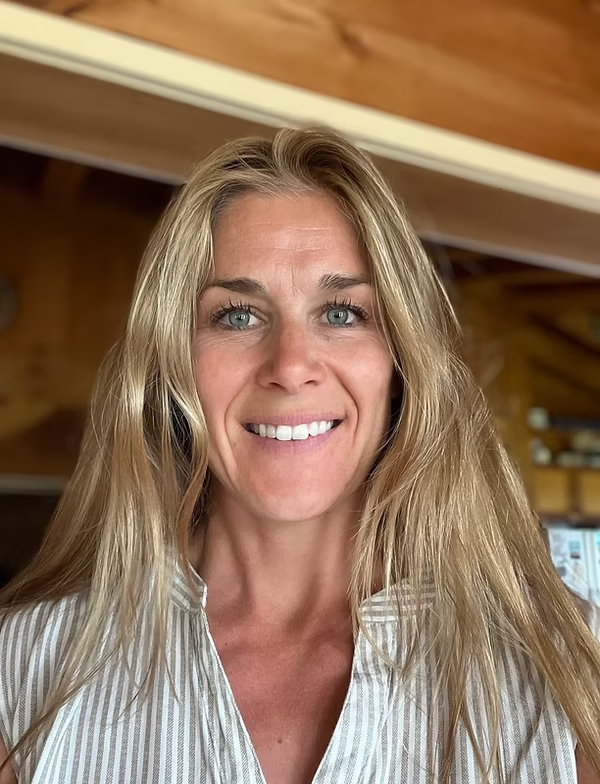
Dr. Tara McCarthy
Expert in veterinaire AI
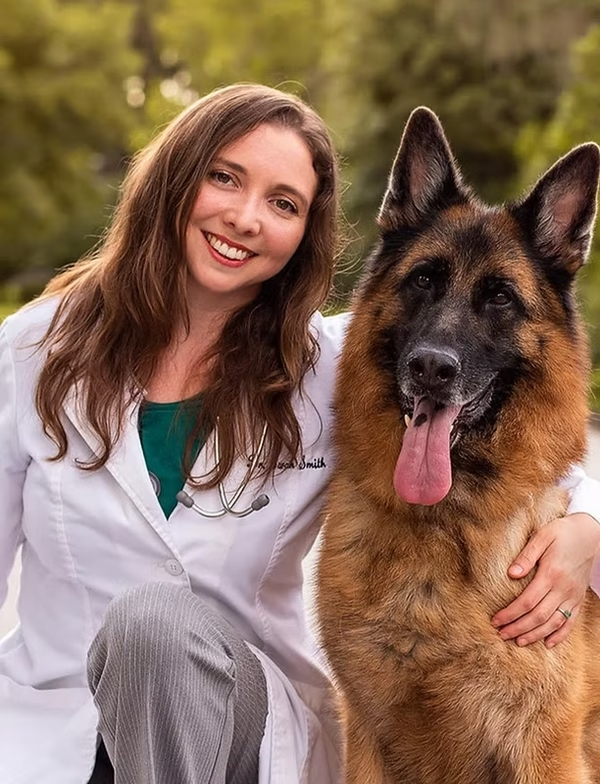
Dr. Sarah Smith
Expert in veterinaire AI

Dr. Kate Surguine
Senior expert in veterinaire AI, klinische kwaliteit en nauwkeurigheid
Trusted Across the Profession
CoVet is built by people with veterinary expertise, and used by veterinary teams in daily practice. AI scribes have become an everyday tool across the profession.



















































CoVet in Action
Watch short tutorials showing how CoVet fits into a real veterinary day.
Hoe je een medisch dossier aanmaakt vanuit een audio-opname in CoVet
Zet een consultopname om in een gestructureerd medisch dossier.
Een medische voorgeschiedenis samenvatten uit een PDF-bestand
Upload patiëntdossiers en maak een overzichtelijke, goed scanbare medische voorgeschiedenis.
Een Consultsamenvatting Genereren
Stuur cliënten naar huis met een heldere, professionele samenvatting die ze kunnen volgen.
De belfunctie gebruiken
Leg telefoongesprekken op dezelfde manier vast als consulten in de praktijk, met minder handmatig werk aan je verslaglegging.
Een verslag exporteren
Kopieer en plak, gebruik de Chrome-extensie, of exporteer via directe integraties.
Eigen sjablonen en sjablonen van de community
Maak je eigen sjablonen met de AI-sjabloonbouwer en ontdek gedeelde content van de CoVet-community.
CoVet Learning Labs
Doe mee met onze live webinars om te leren hoe je jouw werkwijze kunt verbeteren en het meeste uit CoVet kunt halen.
Webinars on demand
Try it on one rotation.
Most faculty start with their own caseload, decide how students will use it, and go from there.
Plan a pilot on your service