)
)
The recording stops and a clean SOAP note appears on the screen. For many veterinary AI scribe tools, that's where the help ends.
Though it's helped save the professional nearly 2+ hours per day in documentation, the trouble is that the note is rarely the last piece of paperwork a case needs. There is still the discharge summary for the client, the referral letter for the specialist, the follow-up instructions, and the work of getting all of it into the practice management system so the patient file is actually finished. A veterinary AI scribe earns its place by carrying the whole case through, from the first technician note to the finished record in the patient file. This article explains what that fuller job looks like, how it supports the whole care team, and what veterinary teams have reported gaining from it.
Key takeaways
|
What does a veterinary AI scribe do?
A veterinary AI scribe captures the consult, whether from exam room audio, dictation, or typed case notes, and turns it into a structured veterinary record. The strongest tools go further and produce the other documents the same case needs, then place the finished record back into the patient file. CoVet is used for veterinary SOAP notes, medical records, discharge summaries, referral letters, client summaries, and follow-up instructions, all drawn from the same consult.
Because it is built for veterinary work, the output already speaks the language of the exam room rather than needing to be reshaped after the fact.
The value shows up in four ways:
It saves clinical time,
It is designed around veterinary workflows
It produces higher quality records,
It keeps documentation consistent across a whole team.
Turning a consultation into a structured SOAP note
The core functionality of an AI scribe is to talk through the case the way you naturally would, and get back a clean, structured veterinary SOAP note.
CoVet takes free-form dictation and unstructured conversation and organizes it into the sections your clinic expects, such as history, exam findings, assessment, and plan.
Veterinarians using CoVet have reported saving five to ten hours a week on documentation, and 45 percent finish their daily records in under 30 minutes. Because the scribe is designed for veterinary cases, it recognizes clinical terminology and structure without needing a rigid template for every situation. You can shape the output with customizable SOAP templates so the note matches how your team already writes.
Using one case to prepare related documents
A finished SOAP note still leaves several documents unwritten. The client needs discharge instructions they can understand at home. A referring or specialty veterinarian needs a clear summary. The record needs to land in the practice management system so the patient file is complete for the next visit. When a scribe stops at the note, all of that lands back on the clinical team at the end of the day.
CoVet generates those downstream documents from the same consult, so one conversation produces the SOAP note, the client summary, the discharge instructions, and the referral letter together. This is a large part of why teams report record quality rising to 90 percent after adoption, up from 68 percent before, since the whole case is documented while it is still fresh rather than reconstructed hours later.
Each document is reviewed before it is shared or saved. The reviewer confirms that the content is accurate, appropriate for its audience, and consistent with the clinical plan.
Helping approved documentation reach the patient file
Preparing the document saves only part of the work if the team still has to move it into the correct patient file.
The exact process depends on the practice management system and the connection available. A direct integration may bring appointment or patient information into CoVet, return approved documents to the corresponding patient file, or support both parts of the workflow.
For supported web-based systems without a direct integration, the CoVet Chrome extension can help the team move completed documentation into the PMS.
CoVet supports connections with systems including Avimark, Cornerstone, ImproMed, Instinct, Merlin, Provet Cloud, Vetspire, Pack Leader DVM, Digimidi, and Vettigo.
Practices should review the guide for their PMS to confirm what information moves between the systems and which steps require action from the team.
Supporting clear and consistent medical records
The PMS connection helps documentation reach the correct patient file. CoVet’s templates and documentation settings help keep the document itself clear and consistent.
Teams can use shared structures while allowing each clinician to adapt the content to the patient and case using their clinical judgement.
In one CoVet pilot, veterinarians rated the quality and completeness of their records at 4.5 out of 5 after adoption, compared with 3.4 before. Colleague readability increased from 3.9 to 4.9 out of 5.
A consistent structure can make it easier for the next person opening the record to find the history, examination findings, assessment, and plan.
Preparing clearer documents for clients
Clinical information often needs to become clear written guidance for the client.
CoVet can help prepare visit summaries, discharge instructions, and follow-up communications using information already collected for the medical record. The clinical team can adjust the language, detail, and recommendations before sharing the document.
In one CoVet pilot, participating veterinarians rated client communication effectiveness at 90 percent after adoption, compared with 74 percent before. More than one-third of surveyed users also reported improved client follow-through on treatment recommendations.
Clear written instructions can help clients understand the care plan once the patient is home.
What to look for in a veterinary AI scribe
A veterinary AI scribe should fit the way the practice documents care, reviews records, and stores patient information.
Start by checking whether the tool is designed around veterinary terminology, species, and case types. Confirm that it can turn natural consultation audio or dictation into the record structure your team uses without requiring clinicians to speak in a rigid format.
Ask which documents it can create from one case. These may include discharge instructions, referral letters, client summaries, and follow-up communications.
Confirm how approved documentation reaches the patient file. Integration can mean different things from one PMS to another. Check what information enters the AI tool, which documents can return, and which steps still need to be completed by the team.
The veterinarian should remain responsible for the final medical record. Every draft should be available for review and editing before it is saved or shared.
From one case to the documents that follow
A veterinary AI scribe can support more than the first clinical note.
CoVet brings the information from a case together, prepares the medical record and related documents, and gives the veterinarian control of the final content. Depending on the PMS connection, the approved documentation can then be returned to the patient file.
Before choosing a veterinary AI scribe, test that full path with a real case. Confirm what the tool can create, who reviews each document, and how the approved information reaches your PMS.
Frequently asked questions
What does a veterinary AI scribe do?
A veterinary AI scribe uses consultation audio, dictation, case notes, and other clinical information to prepare a structured veterinary record. CoVet can also use information already gathered during the case to create discharge instructions, referral letters, client summaries, and follow-up communications.
Can CoVet turn free-form dictation into SOAP notes?
Yes. CoVet can organize free-form dictation and consultation information into SOAP sections such as history, examination findings, assessment, and plan. The veterinarian reviews and edits every draft before approval.
Can a veterinary AI scribe create documents beyond the SOAP note?
CoVet can use information from one case to prepare related documents including discharge instructions, referral letters, client summaries, and follow-up communications.
Does CoVet send documentation to the practice management system?
The workflow depends on the PMS connection. A direct integration may return approved documentation to the linked patient file. For some supported web-based systems, the CoVet Chrome extension can help move the completed document into the PMS.
How much time can CoVet save on documentation?
Veterinarians using CoVet have reported saving five to ten hours per week on documentation. Reported results vary by clinician, practice, case volume, and workflow.
Does CoVet improve record quality?
In one CoVet pilot, veterinarians rated the quality and completeness of their records at 4.5 out of 5 after adoption, compared with 3.4 before. These results reflect that pilot and may vary across practices and workflows.
About the Author
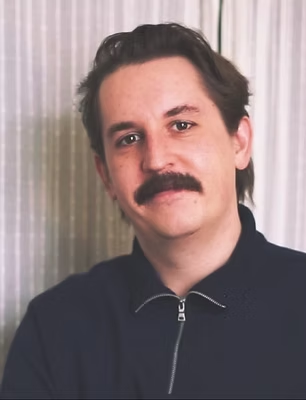
Iain MacNeil
Iain MacNeil is the Content Manager at CoVet. He's the one behind most of what you read here (the copy, the guides, the launch emails, the brand voice) and he's spent the last ten-plus years turning complicated things into stuff people actually want to read. He studied Creative Writing at Concordia, lives in Montreal, and can still land a kickflip despite being in his mid-30s.
)
)
)