)
)
Veterinary notes fall behind because the day keeps moving.
Appointments have a slot. Records usually do not. Add a sick walk-in, a phone call, a dose check, a client who needs five more minutes, and the note gets pushed to later.
Later becomes after lunch. Then after close. Then after dinner.
That does not make someone a bad vet. It means the work took longer than the calendar allowed.
Why notes start to pile up
The appointment keeps going after the client leaves. The consult ends, but the work does not. The record still needs to be finished. There may also be a client summary, referral letter, lab follow-up, or message to send.
Interruptions break your train of thought. You start a note, a nurse needs a dose check, the phone rings, and you come back trying to remember where you were. A review in Frontiers in Veterinary Science links workload and time pressure with burnout, job satisfaction, and intent to leave. A related review found that interruptions add to cognitive load and hurt performance on complex tasks.
One consult turns into several documents. The medical record is for the next clinician. The client summary needs plain language. A referral letter needs a different level of detail. Writing each one separately adds more work. Veterinary report templates help keep the structure consistent.
A small backlog grows fast. Yesterday's unfinished notes are still there when today's appointments start. The longer a record waits, the harder it is to remember the small details.
Why timely documentation matters
Accuracy. Memory fades. The first things to go are small details: the exact wording of the owner's concern, how long the dog had been off food, the finding you meant to flag, or the reason behind a treatment decision.
The RCVS clinical-record guidance says records should be objective, factual, and entered contemporaneously or as soon as reasonably practicable after the event.
Clarity. A record written close to the appointment is easier for the next clinician to follow. If you need to add or correct something later, keep the audit trail clear. The RCVS says changes should stay dated and attributable to the person who made them.
Then there is the part that follows you home.
You finish dinner, open the laptop, and go back through the euthanasia from 3 p.m. Or the emergency transfer. Or the six rechecks you still have open.
The Merck Animal Health Veterinary Wellbeing Study III found high burnout in 49.6% of veterinary support staff and 30.5% of veterinarians surveyed in 2021.
Documentation is one piece of that load. It is also one piece a clinic can change.
We pulled more of the research together in our summary of veterinary burnout statistics.
A gentler way to catch up
If your notes are behind, you do not need a heroic Sunday catch-up session. You need a way to make the pile smaller without adding another pile tomorrow.
1. Make today's notes easier to finish. Pick one habit. Dictate after a farm call when it is safe. Speak the assessment right after the consult. Protect twenty minutes before lunch. Keep it simple enough to repeat.
2. Triage the backlog. Start with records that affect active care, referrals, medication decisions, pending diagnostics, handoffs, or complaints. After that, work through recent cases while the details are still easier to recall.
3. Be clear when an entry is late. Follow the rules for your jurisdiction and practice. Use the real date and time of the entry. Make it clear that the note was added after the visit. Preserve the audit trail.
4. Start with what you can verify. Weight, temperature, medications, lab results, imaging, invoices, and messages are already in the system. Use those facts as the spine of the note. If you cannot remember a detail, do not invent one.
5. Keep the note useful. Write for the clinician who sees this patient three weeks from now at 4:45 p.m. They need the problem, the findings, the thinking, the plan, and the follow-up. Custom CoVet templates help keep that structure consistent.
6. Share the work where it makes sense. Technicians, nurses, assistants, and other team members already hold part of the story. Histories, vitals, treatments, and client instructions can be captured within the team's normal roles. Multi-patient workflows also help when one appointment includes several animals.
7. Tell someone if the pile is getting heavy. A practice manager can protect documentation time, move work, or help make a catch-up plan. You should not have to quietly carry thirty open records and hope nobody notices.
Where an AI scribe can help
A veterinary AI scribe can draft the record while the appointment is still fresh.
That changes the timing of the work. Instead of rebuilding the consult from memory at night, you review a draft soon after the case.
If you prefer to talk through the case after the appointment, veterinary dictation gives you another route.
You still review every draft. The RCVS guidance on AI in veterinary practice says AI-generated records should be manually checked and corrected when needed.
An AI scribe will not erase an old backlog. Those records still need your attention.
What it can do is help keep today's notes from joining it.
That is the part that matters. More records finished while the case is fresh. Fewer charts waiting at home. A little more room to be present in the appointment, and a better chance of leaving work at work.
Start with the next clinical day
Try CoVet free and see how it feels to finish more of the record while the case is still fresh. If you want to see it on a real workflow first, book a live demo.
About the Author
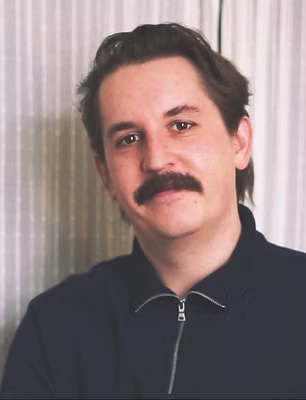
Iain MacNeil
Iain MacNeil is Content Manager at CoVet, where he leads content strategy and storytelling to help veterinary teams cut down on administrative work.
)
)
)