)
A hospitalized patient has just been admitted, the waiting room is still busy, and you're already moving between treatments, phone calls, and inpatient checks. At the same time, you need to make sure the nursing care plan reflects the patient's needs before the next shift.
As the day gets busier, most clinics adapt operations to their workload and clinical preferences. Care plans also often need to be adapted to fit those workflows while still meeting RCVS expectations.
But care plans often fall behind because patient care naturally takes priority during busy shifts.
When workflows aren't well organized, documentation can become fragmented, handovers take longer, important trends are easier to miss, and staff spend more time updating records instead of caring for patients. Documentation issues can increase the risk of failing to meet professional or practice standards
That raises a practical question: how do you keep documentation consistent and meet RCVS expectations without creating more work?
In this article, you'll learn:
Common workflow challenges that affect nursing care plans in busy veterinary clinics.
How to adapt care plan workflows while maintaining RCVS-standard care.
Practical ways to reduce documentation gaps and keep patient care consistent across shifts.
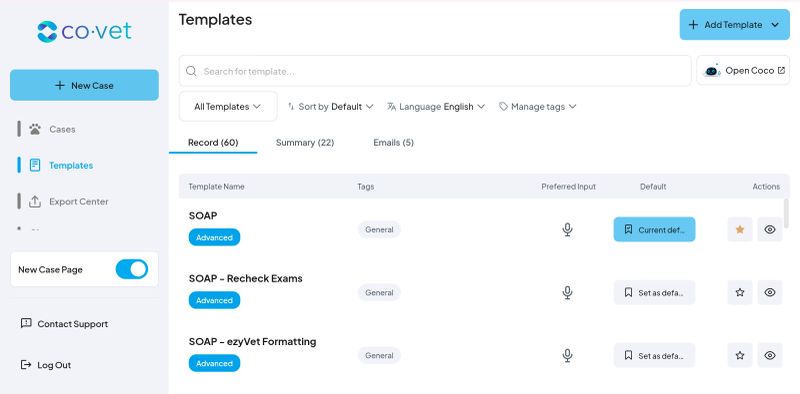
Looking for more specialized templates for veterinary forms?
Browse our complete library of veterinary documentation templates:
What a veterinary nursing care template is and why you need one
A veterinary nursing care plan template is a standardized way to document how a veterinary patient should be cared for throughout their stay in the clinic. It translates a patient's nursing needs into clear, documented actions so every RVN knows what needs to be done, when it should happen, and what should be monitored next.
The template standardizes documentation while allowing patient-specific care planning. supporting a shared workflow for the whole team. It helps standardize patient care, supports clearer communication between shifts, reduces duplicate documentation, and makes it easier to deliver consistent nursing care across the patient's hospitalization.
Why standardization matters for veterinary nursing care templates
In a busy practice, patient care rarely stays with one person. One RVN may admit the patient, another administers treatments, and someone else takes over during the next shift.
For example, a dog recovering from surgery may need pain assessments every four hours, assisted walks, wound checks, and appetite monitoring.
With a structured care plan documented in the template, each intervention is documented as part of the patient's ongoing care, reducing the need to piece together information from verbal handovers or multiple records.
Additionally, everyone has the same point of reference, making it easy for the next RVN to continue where the previous shift left off. This also makes care plans easier to understand, update, and follow, regardless of who is on duty.
Over time, the standardized template becomes part of the practice's clinical workflow rather than another form to complete.
Apart from the benefits, a standardized nursing care plan also helps achieve and maintain specific workflow standards as follows:
To support nursing compliance with the RCVS code: The RCVS Code of Professional Conduct expects veterinary nurses to provide appropriate and adequate nursing care, maintain clear and accurate clinical records, communicate effectively with colleagues, and use clinical governance to continually improve patient care.
A structured care plan can support those responsibilities by giving the team a consistent place to document assessments, interventions, monitoring, and handovers.To reduce preventable clinical errors: A 2025 study in the Journal of the American Pharmacists Association reviewing 1,031 incident reports from a veterinary teaching hospital found that medication errors accounted for 66% of all reported incidents.
Incorrect doses accounted for over half of medication errors, while wrong drug, wrong patient, wrong storage, and documentation errors were also reported. The study also found fewer medication error reports after introducing daily pharmacist chart reviews.
The findings underline the importance of complete medication documentation and review. A nursing care plan can support that process when medication responsibilities, monitoring, and changes are recorded clearly.
Preserves knowledge across the team and supports continuity during staff change: When every RVN follows the same documentation approach, new team members can settle in faster, handovers become more consistent, and the practice is less dependent on individual staff members knowing "how things are done."
The veterinary nursing care plan template supports continuity while senior veterinary nurses are on leave, off duty, or occupied elsewhere.
Veterinary clinical documentation templates for different purposes
Template type | Primary purpose | Related template |
Veterinary nursing care plan template | Guide consistent nursing care and documentation from patient admission to discharge | Sign up & create your template in CoVet (free trial)
|
Physical exam template | Documents physical examination findings during wellness visits, sick appointments, and routine consultations. | |
Surgery record template | Records anesthetic protocols, surgical procedures, intraoperative findings, complications, and recovery notes. | |
Dental chart template | Documents dental examinations, tooth-level findings, procedures performed, and treatment recommendations. | |
SOAP notes | Structures clinical encounters and progress notes using Subjective, Objective, Assessment, and Plan documentation. | |
Veterinary report template | Summarizes diagnoses, treatments, and outcomes for communication with clients, insurers, or external referrals. | |
Veterinary discharge instructions template | Standardize post-visit client communication and home care instructions |
What to include in your veterinary nursing care template
A veterinary nursing plan template is most useful when it mirrors how nursing care actually happens at your practice. If the template doesn't support that workflow, it quickly becomes another form that staff complete after the fact instead of using to guide patient care.
The sections below follow the care planning process used throughout a patient's hospitalization. Each field exists to support a clinical decision, improve communication, or make the next handover easier.
Patient assessment
Every nursing care plan starts with a thorough patient assessment. This is where you gather enough information to understand not only why the patient is in hospital, but also how they normally function when healthy.
A good patient assessment form should capture:
Patient identification and admission details
Presenting problem and clinical summary
Relevant medical history
Current medications and treatments
Baseline observations and vital signs
The patient's normal routine and behaviour before admission
This baseline gives the rest of the care planning process context. Without it, a reduced appetite or lower activity level may be documented without anyone knowing whether it represents deterioration or simply the patient's normal behaviour.
Nursing problems and risk assessment
Once the assessment is complete, identify both the patient's current nursing problems and the complications that may develop if those problems are not managed.
For example, a patient recovering from abdominal surgery may already have reduced mobility. That creates additional nursing risks such as pressure sores, poor appetite, delayed gastrointestinal function, or catheter complications. Documenting these anticipated risks early allows the team to monitor for them instead of reacting once they occur.
Including a simple risk assessment tool or dedicated section in the nursing care plan for potential problems also helps prioritize nursing care when several hospitalized patients require attention at the same time.
Goals and expected outcomes
Each documented problem should have a clear nursing goal.
Rather than writing broad objectives such as "improve condition," define what success looks like. That might be maintaining hydration, achieving adequate pain control, eating independently, or walking comfortably with assistance.
These specific goals guide the choice of nursing interventions and give the next RVN something measurable to evaluate during reassessment.
Nursing interventions checklist
The nursing interventions checklist turns clinical reasoning into practical actions.
Document what needs to happen, who is responsible, and when or how often each intervention should be completed. This might include pain assessments, assisted feeding, catheter care, repositioning, wound monitoring, physiotherapy exercises, or medication administration.
Well-defined interventions also make patient handovers faster. Incoming staff can immediately see which interventions have been completed and which still require attention instead of reconstructing the plan from multiple records.
Monitoring parameters chart
A nursing plan should never remain static throughout hospitalization. Patients improve, deteriorate, or respond differently than expected, and the documentation should reflect those changes.
A monitoring parameters chart provides a structured place to record ongoing observations such as:
Temperature, pulse, respiration, and pain scores
Appetite and water intake
Urination and defecation
Wound appearance and drain output
Mobility and activity
Behaviour and mentation
Response to nursing interventions
Recording these observations consistently makes trends easier to recognize. Small changes that appear insignificant during one shift often become clinically important when viewed over several assessments.
Reassessment and plan adaptation
Each reassessment should answer one simple question: have the patient's nursing needs changed?
If the patient is eating independently, assisted feeding may no longer be necessary. If pain scores remain elevated despite analgesia, the nursing care plan should prompt escalation to the veterinary surgeon rather than continuing the same approach.
Updating the plan as new information becomes available keeps the care plan relevant throughout hospitalization instead of documenting yesterday's priorities.
Client education plan
Care planning does not end when the patient leaves the hospital. Some nursing interventions continue at home, making client education an important part of the overall care plan.
Document any home-care instructions that owners need to follow, including medication schedules, activity restrictions, wound care, feeding instructions, monitoring advice, and signs that require veterinary attention.
Recording these recommendations helps ensure continuity of care after discharge and reduces the risk of important information being missed during client handover.
Personalising care plans using a nursing model framework
A nursing care plan template provides the structure, but every patient still needs an individualized plan of care.
Nursing care plans can also be built around nursing model frameworks such as the Ability Model, which focuses on what the patient can and cannot do independently. Rather than treating every hospitalized patient the same, the assessment considers abilities such as eating, drinking, mobility, elimination, maintaining body temperature, grooming, resting, and expressing normal behaviour. Those findings then drive the care planning process, nursing interventions, and ongoing reassessment.
Other influencing factors should also shape the plan, including the patient's age, life stage, temperament, concurrent disease, owner circumstances, and expected home care.
Personalising the plan in this way supports holistic care while ensuring documentation reflects the patient's individual nursing needs rather than a generic checklist.
Common problems with veterinary nursing care plan templates and how to fix them
Even a well-designed nursing care plan can become difficult to use if it doesn't fit the way a practice actually works. Most documentation problems happen because the template creates extra work, information gets recorded in different places, or important updates are delayed while everyone focuses on the patient.
Most of these problems are better solved by improving the workflow than by adding more fields.
The care plan takes too long to complete
This is often the first complaint when a new nursing care plan template is introduced.
If every assessment requires writing the same information in multiple places, documentation quickly starts competing for time with patient care. During a busy shift, it's tempting to leave updating of the care plan until later, but that's usually when details are forgotten or never make it into the record.
How to fix it:
Remove duplicate fields that already exist elsewhere in the medical record.
Use structured fields, checklists, and monitoring charts where appropriate instead of repeatedly writing the same information.
Review the template with the whole nursing team and remove anything that isn't routinely used.
A care plan should support clinical reasoning, not create paperwork for its own sake.
The care plan is completed once but rarely updated
This is a common workflow breakdown that happens after admission. The patient assessment form is completed thoroughly, nursing interventions are planned, and then the document remains largely unchanged while treatment continues.
Meanwhile, the patient begins eating, pain scores improve, mobility changes, or new concerns develop. Those updates appear in treatment notes but never make their way back into the plan of care.
How to fix it:
Build reassessment into the workflow. Every time observations are recorded or a patient is handed over, ask one question:
"Has anything changed that should update the care plan?"
Treat the veterinary nursing care plan as a live document rather than an admission form.
Documentation relies too heavily on memory
Many workflow errors are not intentional.
A nurse notices a patient hasn't urinated, an owner mentions a change in appetite, or someone remembers they need to update the client after speaking with the vet. The information is kept in mind until another patient needs attention, the phone rings, or an emergency arrives.
Hours later, the detail has been forgotten.
How to fix it:
Record important information as it happens. Small observations often become significant when viewed alongside the rest of the patient's hospitalisation care plan. A dedicated notes section, monitoring parameters chart, or client communication log helps ensure information doesn't rely on memory alone.
Medication instructions leave room for interpretation
Medication-related documentation should never require guesswork.
Unclear handwriting, confusing abbreviations, verbal instructions, similar drug names, or incomplete dosing information can all increase the likelihood of medication errors. Even well-designed nursing interventions checklists lose value if the underlying instructions are ambiguous.
How to fix it:
Record complete medication instructions clearly and consistently.
Avoid unclear abbreviations whenever possible.
Document dose calculations (if applicable) so they can be independently verified.
Include a documented double-check step for high-risk medications.
Record changes immediately rather than relying on verbal updates.
A well-designed template creates opportunities to catch errors before medication reaches the patient.
The template captures tasks not clinical reasoning
Ticking off interventions is important, but it doesn't always explain why they were performed.
For example, documenting that a patient was repositioned every four hours is useful. Recording that the patient had reduced mobility and was at risk of pressure sores explains the clinical reasoning behind that intervention.
That context becomes especially valuable during shift changes, when another RVN needs to understand the patient's priorities without piecing together multiple records.
How to fix it:
Link each nursing intervention to an identified nursing problem, expected outcome, or risk assessment tool. This keeps the care planning process focused on patient needs rather than task completion.
Client communication isn't documented consistently
Client communication is one of the easiest tasks to postpone during a busy day.
A vet asks you to call after reviewing blood results, another patient requires urgent attention, and before long the end of the shift arrives. If a conversation isn't documented, the next team member may assume the update has already been given.
How to fix it:
Include a dedicated section within the nursing care plan template for client communication or the client education plan. Record:
When an owner was updated.
What information was discussed.
Any concerns or questions raised.
Agreed follow-up actions.
This creates continuity between the clinical team and the client while reducing missed callbacks.
The team treats the care plan as one person's responsibility
A nursing care plan works best when everyone contributes to it.
If one RVN creates the plan but nobody else feels responsible for maintaining it, updates become inconsistent and the document gradually loses value. In practice, hospitalized patients are cared for by multiple people across multiple shifts, so the documentation needs to reflect that shared responsibility.
How to fix it:
Make reviewing and updating the plan part of every handover. When the whole multidisciplinary team contributes to maintaining the record, the veterinary nursing care plan template becomes a shared clinical workflow instead of an individual document.
Adapting the veterinary nursing care template by practice type
The core care-planning process stays the same, but the information that needs the most detail will vary by practice type, patient population, and level of monitoring.
A good template should adapt to your workflow without changing your documentation standards. Every patient still needs an assessment, identified nursing problems, planned interventions, ongoing monitoring, and regular reassessment. The difference lies in what your team needs to document in greater detail to support safe, consistent care.
General veterinary practice
Most general practices manage routine surgeries, short-term medical cases, and patients recovering after procedures. The nursing care plan should help the team document efficiently while ensuring important observations aren't missed between treatments and discharge.
Templates for general practice work best when they focus on:
Patient assessment and admission notes
Medication schedules
Pain assessment
Feeding, hydration, and elimination
Wound and catheter checks
Client education and discharge planning
Since patients often stay for only a short period, the template should make it easy to document recovery milestones and prepare the patient for discharge without duplicating information elsewhere in the medical record.
Emergency and critical care
The documentation process changes significantly when patients are unstable.
That’s when the emphasis of the workflow shifts toward documenting frequent reassessment as the patient's condition changes throughout hospitalization, while routine nursing documentation continues.
The care plan then becomes a working document that guides nursing priorities from one patient round to the next.
Templates for emergency and critical care veterinary practices should provide enough space to record:
Frequent monitoring parameters
Fluid balance
Oxygen therapy and respiratory status
Cardiovascular monitoring
Pain assessment
Escalation of care
Changes made after each reassessment
Because patient priorities can change within minutes, the nursing care plan should be reviewed and updated throughout the day rather than only during admission or shift handover.
Specialty and referral clinics
Referral hospitals often involve several clinicians, specialist nurses, and longer hospital stays. Patients may move between departments while multiple treatment plans run simultaneously.
In these settings, the template needs to support multidisciplinary communication as much as individual nursing care. Alongside routine nursing interventions, it should clearly document specialist recommendations, ongoing patient outcomes, changes to the treatment plan, and follow-up actions after rounds.
A structured plan helps every member of the team understand the patient's current priorities without having to piece together information from multiple records.
Exotic practice
Exotic patients often require nursing care that extends beyond medical treatment alone.
Environmental conditions, species-specific husbandry, nutrition, handling requirements, and stress reduction frequently become part of the nursing care plan. Small changes in appetite, behaviour, or environmental conditions can have a significant impact on patient recovery, making consistent documentation especially important.
Rather than relying on generic hospitalisation care plans, templates should include dedicated sections for recording species-specific care requirements alongside routine monitoring.
Equine practice
Equine nursing combines hospital care with practical considerations that aren't always encountered in small animal practice.
Mobility, stable management, feeding routines, bandage care, and owner communication often become important parts of the daily nursing workflow. In ambulatory settings, documentation also needs to remain practical enough to complete outside the hospital while maintaining the same standard of record keeping.
A well-designed plan of care template helps ensure that important nursing observations continue to be documented consistently, regardless of whether care is delivered in the hospital or on the yard.
Comparing veterinary nursing care plan templates by practice types
The core structure of a veterinary nursing care plan template should remain consistent across every practice type. But instead of redesigning the entire template, adapting the emphasis of the template usually provides enough flexibility to support different workflows while maintaining consistent documentation standards.
Practice type | Primary focus | Common procedures | Template emphasis |
General veterinary practice | Routine inpatient care and post-operative recovery | Neutering, dental procedures, lump removals, wound management, short-term medical admissions | Patient assessment form, medication schedule, nursing interventions checklist, pain scoring, discharge planning, and client education plan |
Emergency and critical care | Patient stabilisation and continuous reassessment | Trauma, oxygen therapy, fluid therapy, emergency surgery, critical medical cases | Monitoring parameters chart, fluid balance, risk assessment tool, frequent reassessments, escalation notes, and plan adaptation strategies |
Specialty and referral practice | Managing complex conditions across multidisciplinary teams | Orthopaedics, neurology, oncology, internal medicine, advanced surgery | Clinical reasoning process, multidisciplinary team collaboration, patient outcomes tracking, specialist nursing interventions, and longer-term hospitalisation care plans |
Exotic practice | Species-specific nursing care and husbandry | Avian, reptile, rabbit, and small mammal medicine and surgery | Environmental monitoring, nutritional support, handling requirements, influencing factors, and personalised care plans |
Equine practice | Hospital and ambulatory nursing for large animals | Colic management, orthopaedic care, wound management, reproductive care, medical admissions | Mobility assessment, stable management, feeding schedules, bandage care, client communication, and documentation suitable for both hospital and field settings |
Automating your veterinary nursing care template
In many practices with higher workload, documentation often happens after the clinical work is done, when the shift has moved on and the details have to be reconstructed from memory, handwritten notes, treatment sheets, or verbal handovers. If these delays are long, it increases the risk that some of the details will be missed and result in documentation errors.
AI can help by fitting into that existing workflow rather than changing it. During clinical activities, you can record spoken findings and organize them into a structured veterinary nursing care plan template. This adds several advantages:
Lets RVN stay in their regular clinical workflow
Capture clinical reasoning and nursing decisions alongside patient assessment
Makes the record more accurate and easier for the next team member to follow
Reduces information duplication.
Reduces much of the repetitive veterinary admin work
Helps complete admin work in the process of delivering clinical care, rather than completing it in post-clinic hours.
CoVet supports this workflow by capturing your spoken clinical findings and structuring them into customizable veterinary nursing care plan templates developed by veterinary professionals. They can also instantly review, edit, and approve documentation that the AI system has already organized into the appropriate sections. Different veterinary practices can tailor templates to match their own documentation standards and workflow. Plus, they can sync completed records with compatible practice management systems through integrations or the Chrome Extension.
CoVet gives teams a consistent template structure while keeping the final record reviewable and editable by the people providing the patient's care.
Frequently asked questions about veterinary nursing care templates
1. How often should a veterinary nursing care plan be reviewed and updated during a hospitalized patient's stay?
A veterinary nursing care plan should be updated whenever the patient's condition, nursing priorities, or treatment plan changes. In routine hospitalizations, this often happens during patient assessments, treatments, and shift handovers. For critical patients, the care plan may need to be reviewed much more frequently so the documentation continues to reflect the patient's current needs rather than their condition at admission. A structured patient rounds process helps ensure care plans are reviewed consistently during each handover.
2. What information belongs in a veterinary nursing care plan versus the medical record, treatment sheet, or discharge instructions?
The veterinary nursing care plan focuses on how the patient will be cared for throughout their stay. It documents nursing assessments, planned interventions, monitoring priorities, and ongoing reassessments so every RVN understands what needs to happen next. Other records, such as the medical record, treatment sheet, and discharge instructions, serve different purposes within a complete set of veterinary documents, so the care plan should complement them instead of repeating the same information.
3. How can RVNs standardize nursing care plans without creating extra documentation for every patient?
Start with a standardized veterinary nursing care plan template that covers the core documentation required for every hospitalized patient, then adapt it to each case instead of creating a new plan from scratch. This keeps documentation consistent while allowing nurses to record patient-specific observations, interventions, and monitoring needs. Reviewing workflow templates regularly also helps remove unnecessary fields and ensures it continues to match the practice's workflow.
4. What's the best way to adapt a veterinary nursing care plan template for emergency, equine, exotic, and specialty patients?
Keep the overall care planning process consistent and adjust the template to match the needs of each practice type. Emergency patients require more frequent reassessments and monitoring, while exotic, equine, and specialty patients often need additional sections for species-specific care, multidisciplinary communication, or longer hospital stays. Adapting one flexible template is usually more effective than maintaining completely separate documentation systems.
5. What are the most common documentation mistakes in veterinary nursing care plans, and how can they be prevented?
Common problems include updating the care plan too late, relying on memory instead of documenting observations promptly, and treating the care plan as one person's responsibility rather than a shared team resource. These issues can lead to incomplete records, inconsistent patient care, and communication gaps between shifts. Using a library of standardized veterinary templates and updating it throughout the patient's stay helps keep records accurate and useful for the whole team.
6. How can veterinary nurses use standardized care plan templates to improve communication during patient handovers and shift changes?
A standardized nursing care plan template gives every team member the same patient record and same structure for the nursing care plan. During handovers, the incoming RVN can quickly understand the patient's current condition, what has already been completed, and what still requires attention. This reduces the need to rely on verbal updates or personal documentation styles and helps maintain continuity of care across the team.
About the Author
)
)
)